
CHW has documented the destruction of Shusha’s Old Armenian-Russian Cemetery from May 9-14, 2026. Our full investigation is available as a CHW StoryMap “A Cemetery Lost in the Rebuilding of Shusha“.
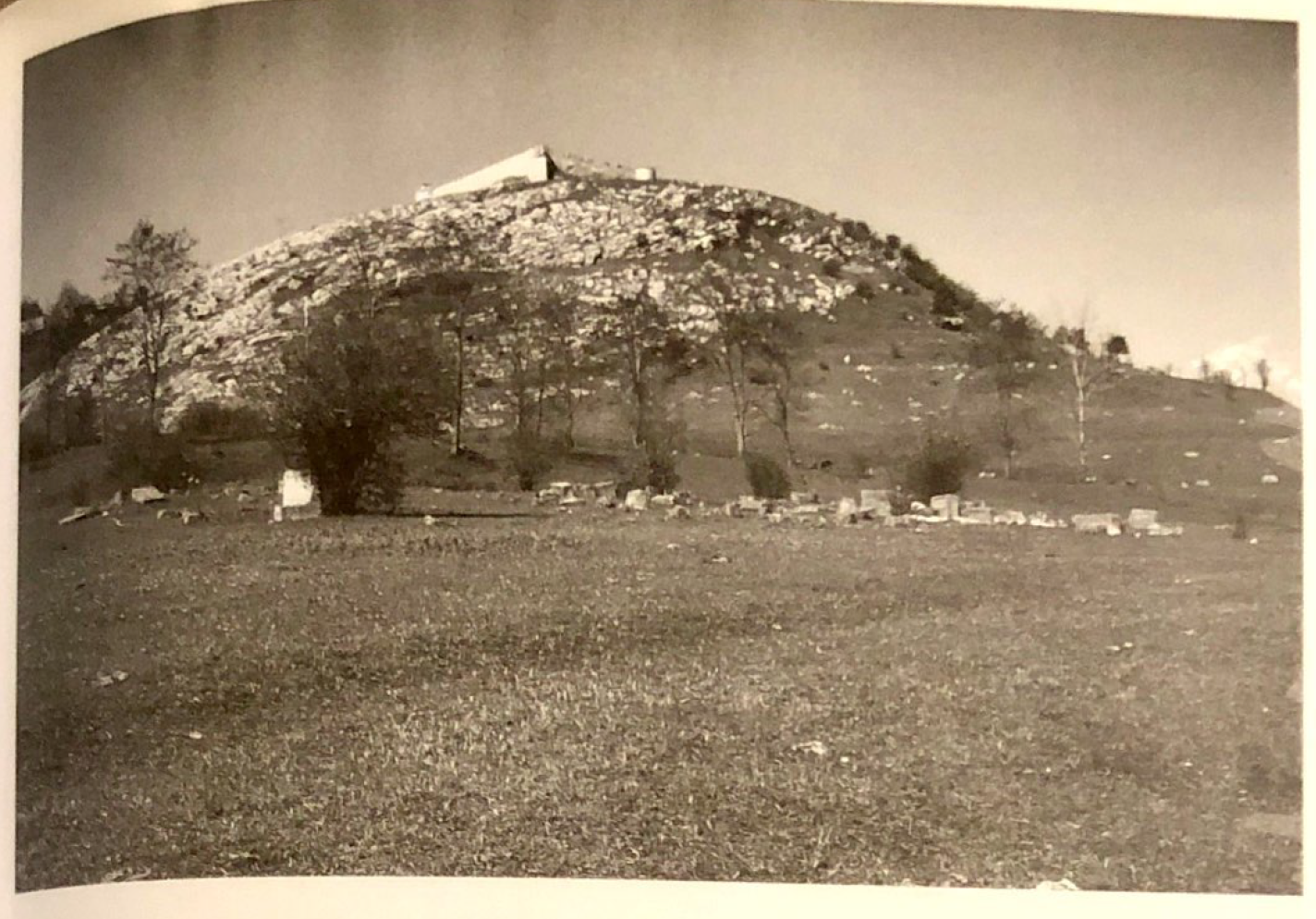
The cemetery contained medieval Armenian khachkars and 19th century Armenian and Russian tombstones spanning 1810-1871. The 35 tombstones preserved evidence of some of the people and institutions that shaped 19th c. Shusha: Armenian families and artisans, Russian military officers, physicians, civil servants, and administrators. The site offered a window into the city’s social history.
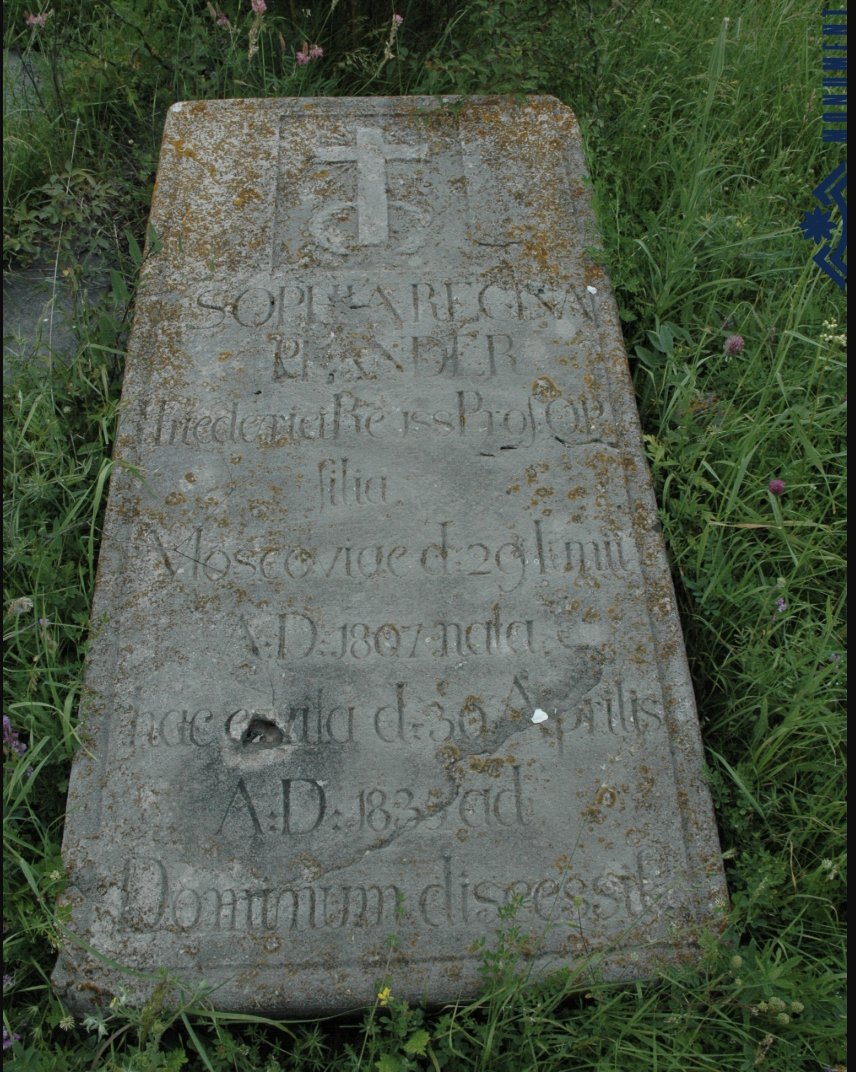
Tombstones revealed connections beyond Karabakh. One Latin inscription (see photo above) commemorated Sophia Regina Reander born in Moscow, likely to a prominent German scientist. Another belonged to Vladimir Mikhailov, commander of the 42nd Jäger Regiment linked to the 1826 defense of Shusha.
The cemetery also contained 5 Armenian khachkars. These carved stone crosses predated the 19th c. burials by hundreds of years, linking the site to the medieval Armenian history of Karabakh. Together, the khachkars and graves formed a historical landscape spanning centuries.
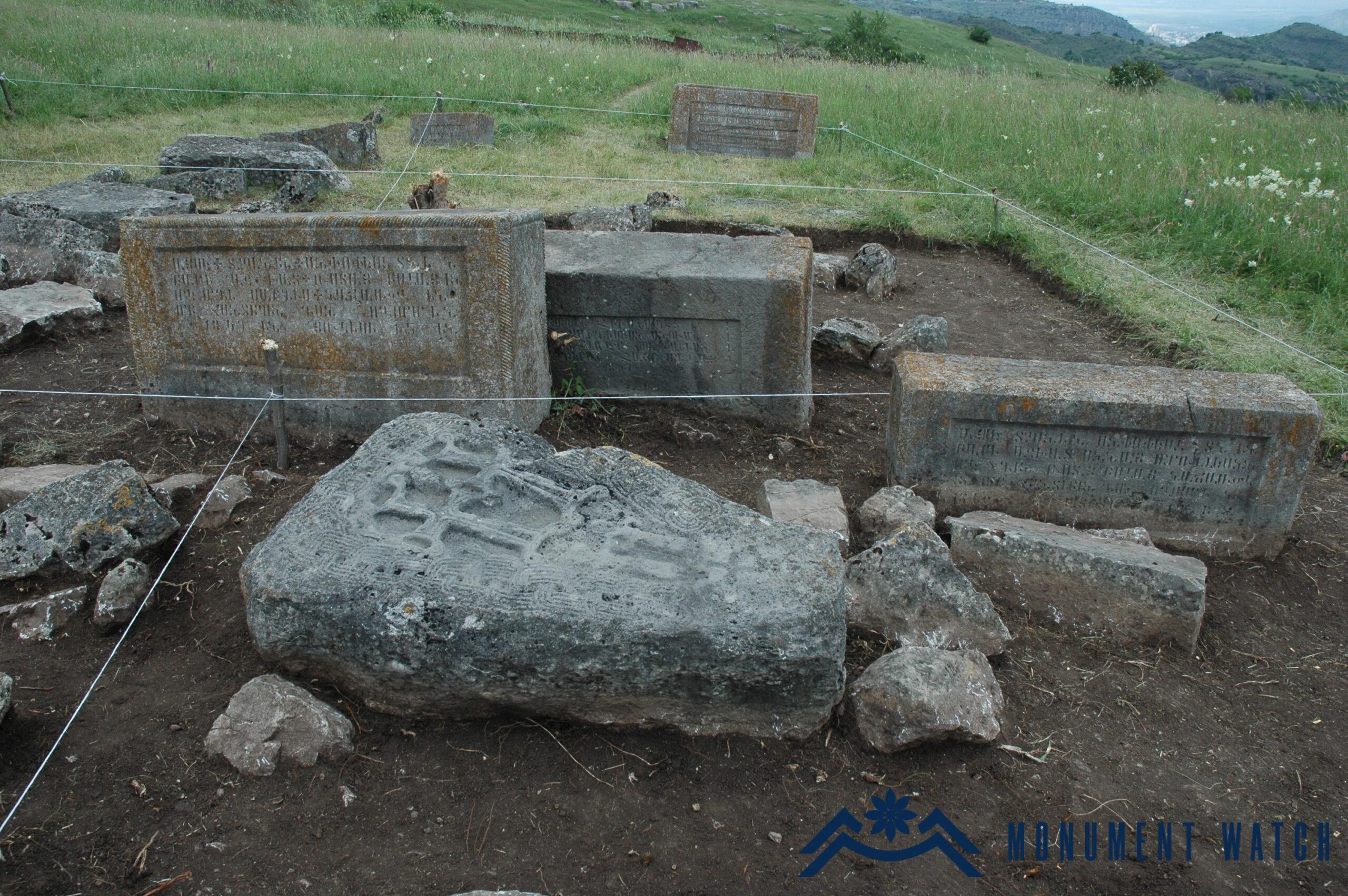
The cemetery survived wars and regime changes. It did not survive Azerbaijan’s 21st century redevelopment. The destruction is linked to a rainwater and wastewater treatment facility. Read our full investigation in the StoryMap.
Comments are closed